 NextNeural
Voice AI in Real Estate: Solving the Industry's Core Communication Bottlenecks
Real estate runs on conversation. Every transaction, whether it’s a lead inquiry, a property showing, a maintenance request, or a lease renewal, begins and often concludes over the phone. Yet most brokerages and property management firms still handle this volume the way they did a decade ago: a person answers, or a person doesn’t, and the outcome depends largely on who happened to be available at that moment.
That dependency is the real issue. It isn’t that agents and property managers lack diligence. It’s that the volume of calls the industry generates has simply outgrown what any team can absorb consistently, especially outside business hours. Leads go unanswered overnight. Simple listing questions eat into time better spent closing deals. Maintenance requests and CRM notes get logged when someone remembers to, which is not always.
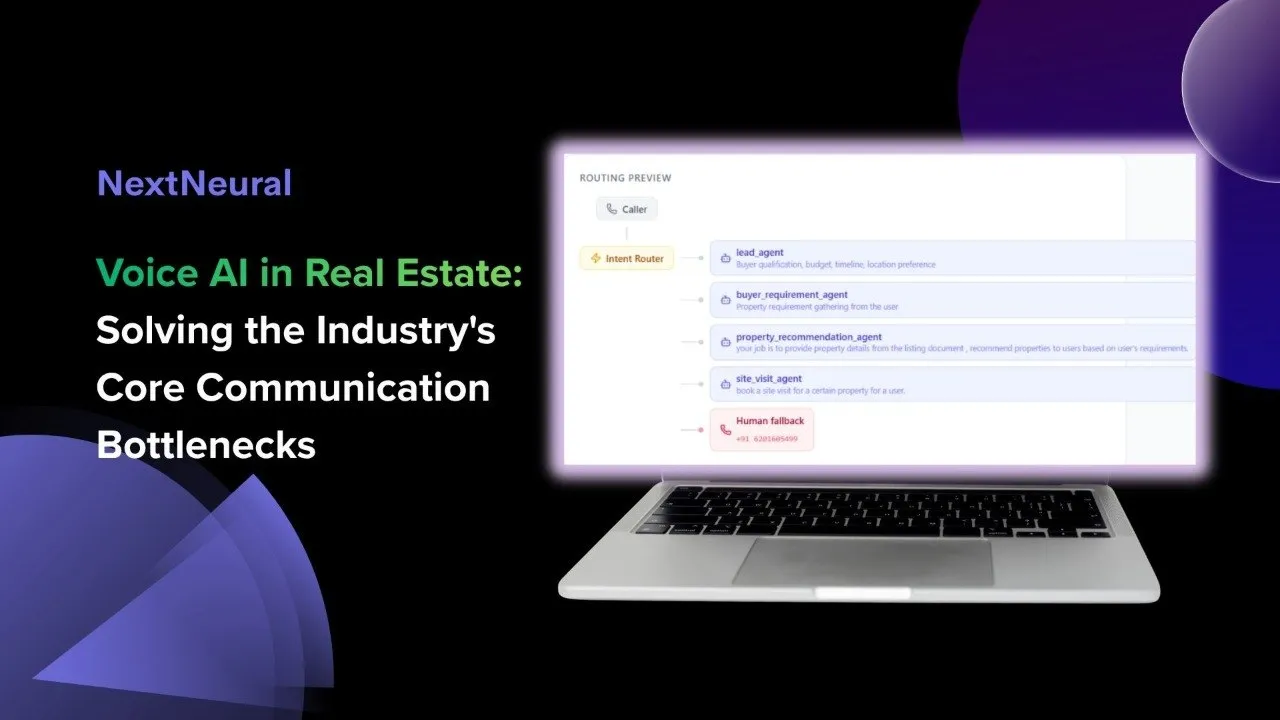
Voice AI is built to close that gap. It isn’t a scripted phone tree or a chat widget with a voice attached; it’s a system that can listen to a real call, understand what’s actually being asked, take action on it, and respond in a natural, conversational way. For an industry where how quickly you pick up the phone often decides who gets the deal, that distinction matters.
What follows is a look at five points in real estate operations where this consistently makes a measurable difference: what tends to go wrong, how voice AI changes it, and what’s actually happening technically when it does. It closes with a look at NextNeural, a platform built to handle all five within one system.
1. Lead Generation and Qualification
A lead’s window doesn’t stay open long. Research from Real Trends and InsideSales.com found that agents who contact a lead within five minutes are 21 times more likely to qualify that lead than agents who wait 30 minutes, and separate industry research puts the buyer-side number even higher: close to 78% of buyers end up working with whichever agent happens to respond first. Yet the average agent still takes well over an hour to respond to a new web lead, long past the point where contact probability has already fallen by more than half. Most real estate teams know the data and still can’t guarantee sub-five-minute speed at 11 PM on a Tuesday, which is exactly when a lot of these leads come in.
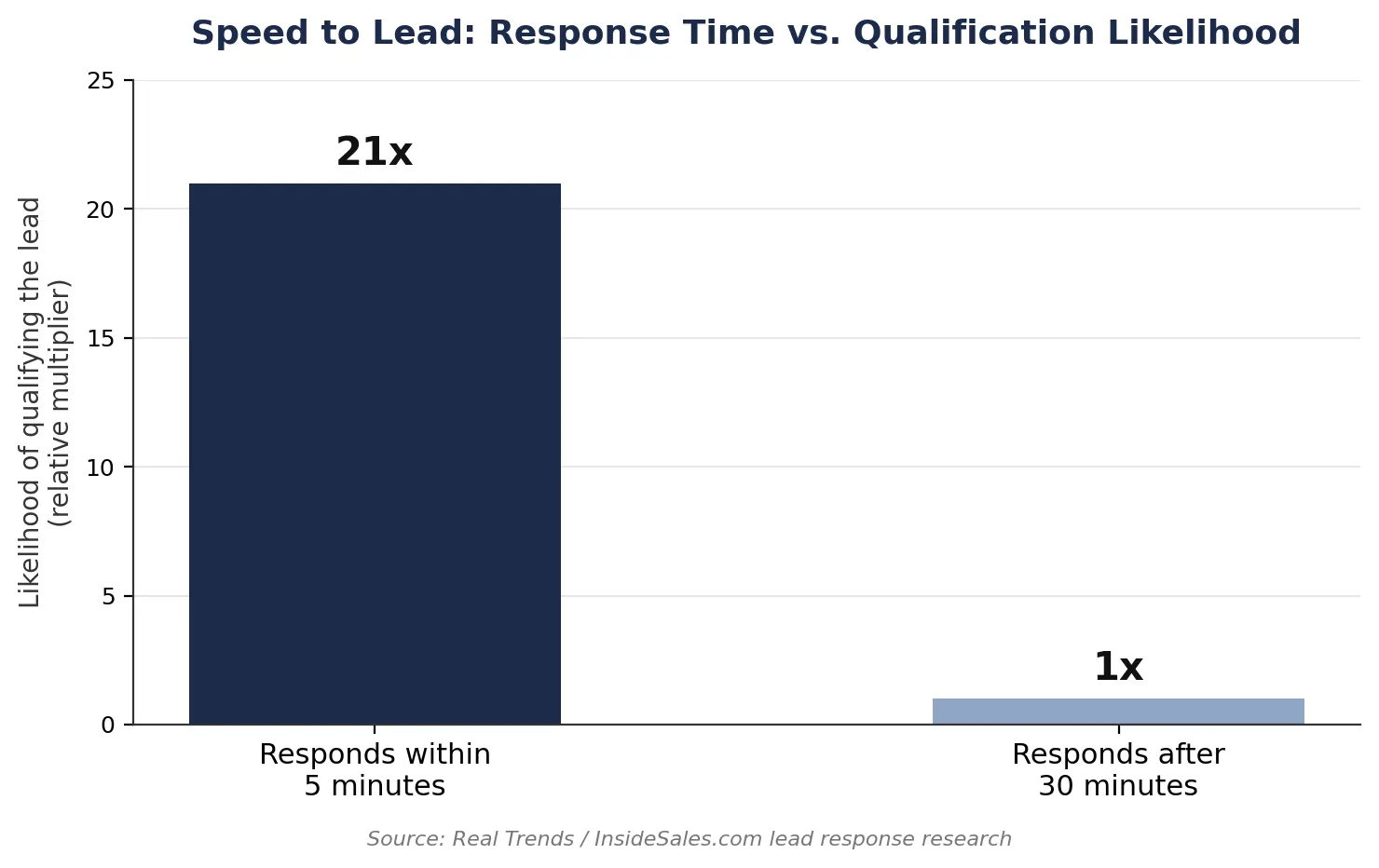
What tends to break: By the time a human gets to a late or off-hours lead, it’s frequently already gone, either uninterested or already speaking with a faster-moving competitor.
How voice AI changes it: A voice AI agent can call a new lead back within seconds of submission and run an actual qualifying conversation covering budget, timeline, financing status, and location preferences, adjusting its questions based on what it hears rather than reciting a fixed script. The lead is scored and routed before a human would have even seen the notification.
Underneath, this depends on three things working together in real time. Speech recognition converts what the caller says into text as they’re saying it. A language-model-based conversation engine reads that text, works out intent, and decides the next question dynamically, a meaningful step up from the branching menus of a traditional IVR. Text-to-speech then turns the response back into natural audio. The entire exchange typically completes in under a second, which is what keeps it feeling like a conversation rather than an interaction with a machine.
2. Handling Inquiries and Scheduling
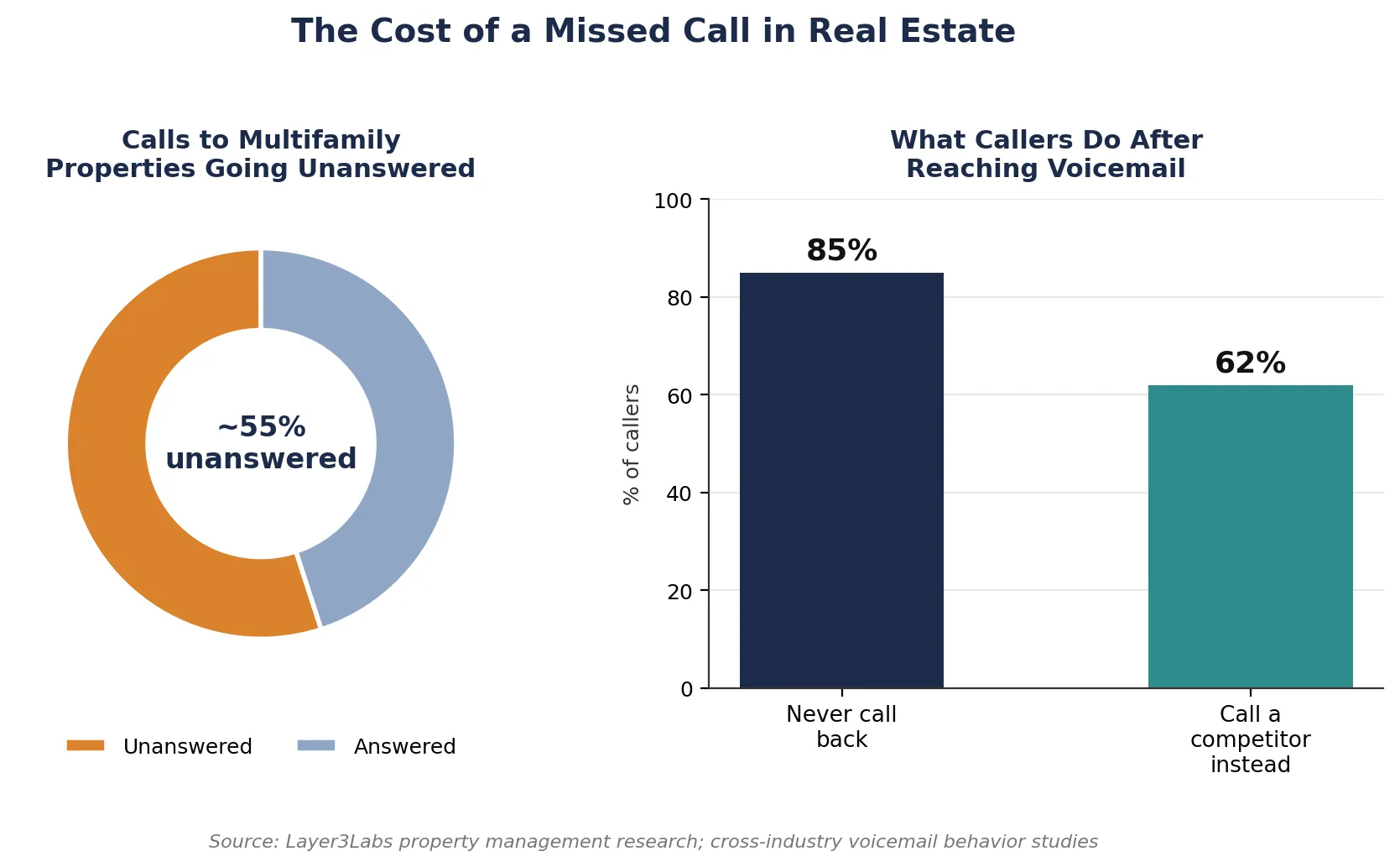
A large share of the calls coming into a real estate office are simple: Is this still on the market? What’s the square footage? Can I see it this weekend? None of these questions are hard. But they’re constant, and when staff are mid-showing or mid-call, the ones that go unanswered are opportunities quietly lost. Industry research on leasing and listing calls puts a concrete number on that loss: as many as 49% to 60% of calls to multifamily properties go unanswered, and 85% of callers who reach voicemail never call back. Each missed leasing call has been estimated to cost around $1,000 in lost rental income.
What tends to break: Prospective buyers or renters call with a straightforward question, get no answer, and either try again later or don’t try at all.
How voice AI changes it: A voice AI agent answers the call, retrieves the current listing details, and books a showing in the same conversation. There’s no callback required and no gap between the question and the resolution.
This works because the agent is connected via API to live data, including MLS feeds and CRM records, so it can pull accurate, current information mid-call rather than reciting something that may already be outdated. A separate connection to calendar systems lets it check real availability and confirm a booking on the spot. This is generally referred to as function calling: the AI isn’t only generating a spoken answer, it’s performing an action, whether that’s a lookup or a booking, as part of the conversation itself.
3. Tenant and Property Management
Property management is built on recurring, low-complexity interactions such as maintenance calls, rent reminders, and lease renewal outreach that are genuinely difficult to staff consistently, particularly after hours. The added complication is urgency: a burst pipe and a sticking door lock sound similar on paper, but treating them the same way can mean real damage or a frustrated tenant.
What tends to break: Requests sit unaddressed until office hours resume, or urgent issues get queued behind routine ones simply because nobody triaged them correctly.
How voice AI changes it: A voice AI agent takes the maintenance call, works out how urgent the issue actually is, logs the details, and routes it to the right vendor or on-call staff member. The same system handles outbound rent reminders and lease renewal check-ins automatically, without anyone needing to schedule the call. Properties that have automated this kind of triage report average maintenance response times dropping from around 4.6 days to under 18 hours within the first month, with tenant satisfaction scores improving by roughly 35% as a result.
This relies on intent and urgency classification models that process what’s being reported and distinguish, for instance, a plumbing emergency from a minor cosmetic complaint, allowing genuinely urgent issues to be escalated immediately rather than waiting in line. Outbound calls, meanwhile, are triggered directly by data already sitting in the property management system, such as a due date or a lease expiration, so the system reaches out based on records that already exist rather than a person remembering to place the call.
4. Multi-Language Support
Real estate markets are often more linguistically diverse than the staff covering them. According to U.S. Census Bureau data, more than 67.8 million Americans, over one-fifth of the population, speak a language other than English at home. A lead or tenant who doesn’t get served in their preferred language usually doesn’t complain; they just go elsewhere, and the business rarely finds out why. Staffing every language on every shift isn’t a realistic fix for most organizations.
What tends to break: Calls in a less common language get missed, mishandled, or passed around until someone who can help happens to be free.
How voice AI changes it: A single voice AI agent can conduct a full conversation in whichever language the caller speaks, detecting it automatically at the start of the call and responding natively, with no separate setup or staffing required per language.
This depends on multilingual speech recognition and text-to-speech models capable of handling a wide range of languages, paired with an automatic language-detection step at the start of the call. The same deployment can move from a call in Spanish to one in Mandarin to one in English, back to back, without reconfiguration in between.
5. CRM Auto-Logging
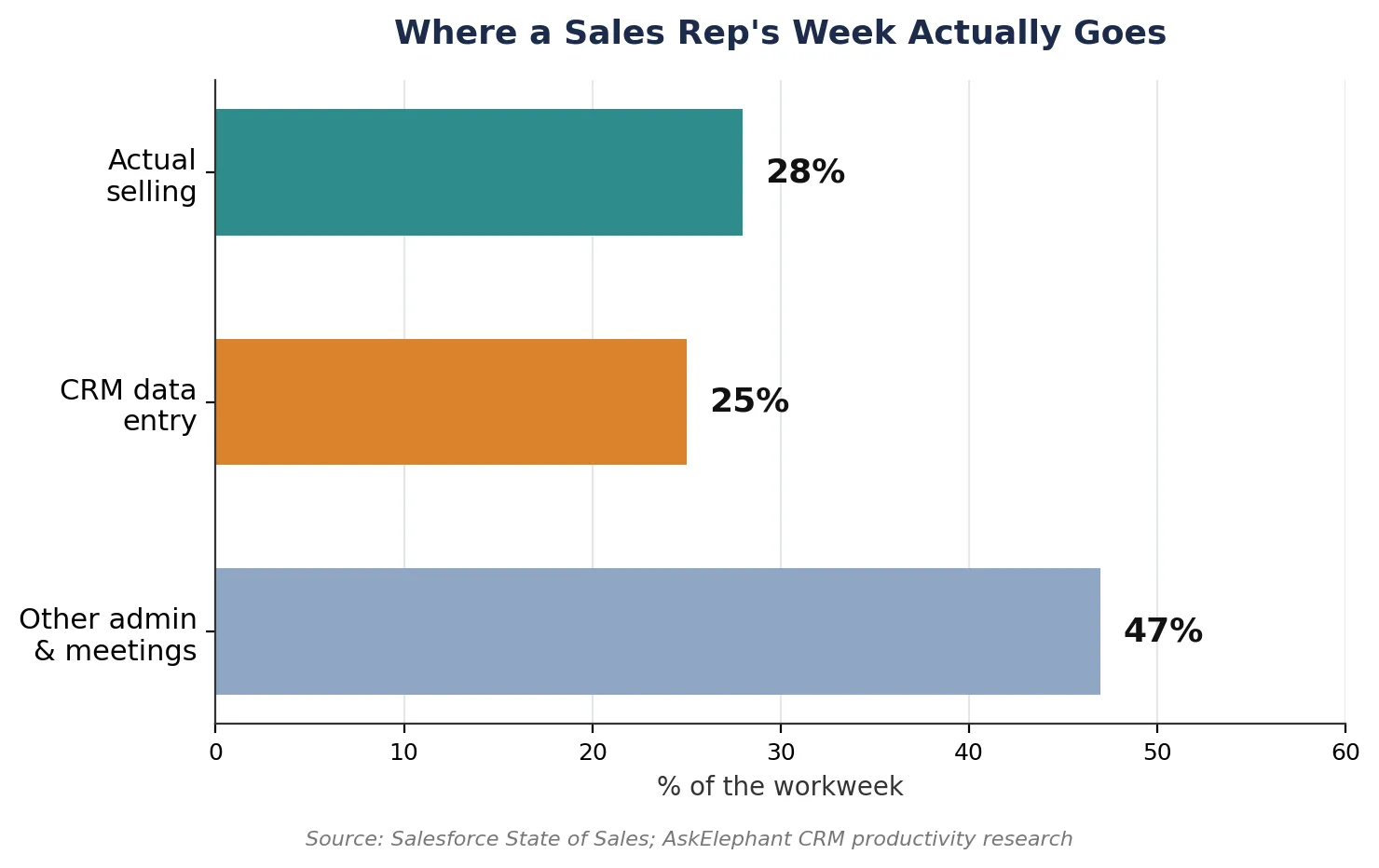
Manual call logging is one of those tasks everyone agrees matters and almost nobody does consistently. Sales reps report spending roughly a quarter of their workweek on manual CRM data entry, and in one industry survey, 37% admitted to fabricating CRM data because the burden of logging every call by hand simply didn’t hold up against the pressure to keep selling. Agents forget, run out of time, or log a call with a note vague enough to be useless three weeks later. The result is a CRM that looks complete but is quietly full of gaps.
What tends to break: Follow-ups happen based on memory rather than record, and details that mattered in the moment, such as an objection or a specific request, don’t make it into the system at all.
How voice AI changes it: Every call gets transcribed, summarized, and logged into structured CRM fields automatically, the moment it ends, with no manual entry required.
After the call, the transcript passes through a summarization step that extracts specific fields, including intent, sentiment, objections raised, and agreed next steps, and syncs them into the CRM via API. What used to be an unstructured conversation becomes structured, searchable data, consistently, for every call rather than the ones someone happened to remember to write up.
A Connected Problem, Not Five Separate Ones
Taken one at a time, these read like five distinct issues. In an actual business, they’re one continuous sequence: a lead calls in, gets qualified, asks about a listing, books a showing, maybe calls back later in a different language, and every stage of that has to be remembered accurately by whoever handles the next one.
Solving each stage with a different tool, an IVR here, a translation add-on there, a standalone scheduling bot, a disconnected CRM plugin, creates a seam at every handoff, and context gets lost at each one. The more durable answer is a single voice AI system that owns the full call, start to finish, with nothing dropped in between.
That’s the specific problem NextNeural was built to solve.
NextNeural: A Unified Voice AI Platform for Real Estate
NextNeural handles the complete call, from first ring to resolution, with natural, low-latency conversation grounded in an organization’s own data. Its capabilities map directly onto the five areas above.
- It doesn’t wait for business hours. NextNeural agents run 24/7 with response latency under one second, so a lead or inquiry gets addressed the moment it arrives rather than the next time someone’s free.
- It isn’t limited to one language. Natural-sounding voices across 90+ languages and regional accents mean multilingual calls are handled natively, without separate staffing or setup per language.
- It answers from real data, not a script. NextNeural workflows are built directly on an organization’s SQL databases, CRM records, and documents, so a response to a listing or tenant question reflects what’s actually true right now.
- It handles both directions of the call. Inbound listing inquiries and scheduling, outbound lead qualification, rent reminders, and lease renewal outreach all run on one platform rather than several stitched together.
- It doesn’t buckle under volume. Unlimited concurrent calls means a busy open-house weekend doesn’t mean some callers get through and others don’t.
- It works with the phone system already in place. Native integrations with Plivo, Exotel, and Twilio, plus support for any SIP-compatible carrier via FreeSWITCH, mean deployment doesn’t require replacing existing infrastructure.
- It remembers, so no one has to. Every call is transcribed and analyzed automatically, with sentiment, intent, and escalation signals surfaced without manual review, feeding directly into CRM auto-logging.
- It sounds consistent, call after call. Voice cloning allows a specific brand voice or agent persona to be deployed across every interaction.
- It deploys on the organization’s terms. Managed cloud, API-first integration into an existing product, or fully sovereign and air-gapped deployment are all available for organizations with stricter data requirements.
Conclusion
An organization relying solely on manual phone handling is limited by staff capacity, regardless of how capable that staff is. Voice AI removes that ceiling, handling lead qualification, inquiries, scheduling, tenant support, multilingual communication, and CRM logging consistently and at scale, without the delays that come with doing it by hand.
The right evaluation criteria for any voice AI platform are response latency, depth of data integration, telephony compatibility, and deployment flexibility. These are the factors that determine whether the system functions as a genuine extension of the team, or simply as another layer of automation sitting on top of the same old bottlenecks.
Try Voice AI free or speak with the NextNeural team to evaluate a deployment for your organization.
Sources: Real Trends and InsideSales.com lead response research; Icenhower Consulting; U.S. Census Bureau American Community Survey; industry research on multifamily leasing call volume and maintenance response times; AskElephant CRM productivity research.
Ready to Transform Your Business with AI?
Join NextNeural today and deploy production-ready AI agents in minutes.
Build an Agent