 NextNeural
Field Sales Intelligence Using Voice AI
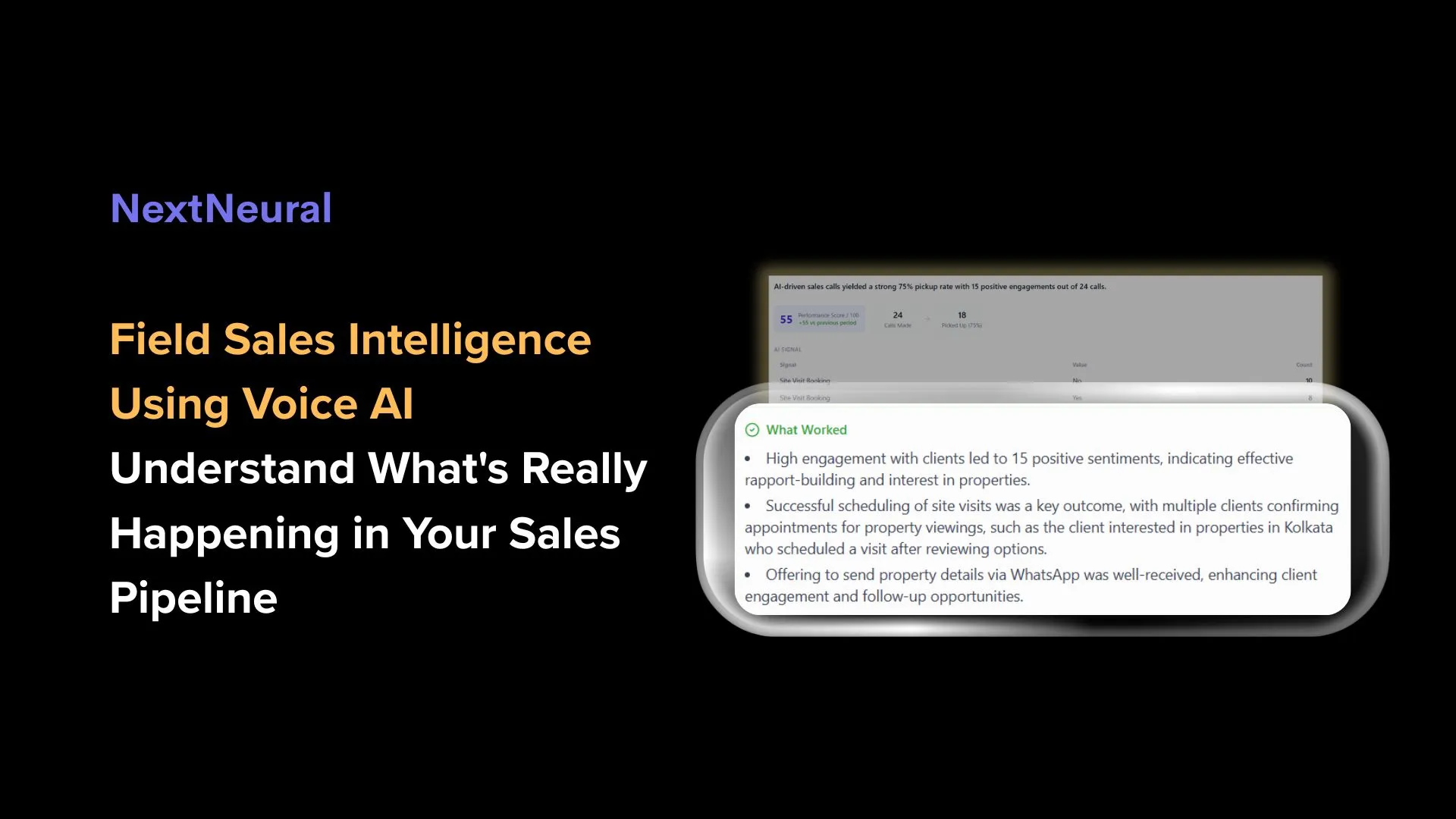
How NextNeural helps organizations understand what’s really happening in their sales pipeline.
You open the CRM on a Monday morning and scroll through last week’s data of closed and lost deals. Next to each entry is a reason: budget, timing, went with a competitor. You already know these reasons are only half true. A rep who just lost a deal isn’t going to write “I fumbled on the pricing conversation” into a dropdown menu. They’re going to pick whichever option makes the loss sound unavoidable, and move on to the next call.
Unless you were personally on that call, or sitting in on that site visit, you have no way of knowing what actually happened. And you can’t sit in on all of them. So you end up managing a pipeline built on secondhand summaries, written by people who have every reason to round their own performance up.
That’s not a rep problem. It’s a visibility problem, and it’s been baked into sales for as long as CRMs have existed.
The Conversation Is the One Thing Nobody Captures
Every CRM and pipeline tool in use today runs on the same fragile input: a human being, typing in a summary after the fact. After a forty minute call, most reps don’t have the time or the energy to write down the nuance. They mark it “good call,” set a follow-up reminder, and move to the next thing on their calendar. Nobody’s being lazy here. It’s just an impossible amount of admin work to do well, call after call, day after day.
The result is that leadership ends up guessing at what “good” actually meant. Was the prospect genuinely excited, or just polite? Did they raise a real objection about price, or a soft one you could have worked around? None of that survives into the CRM, because nobody has time to write it down properly.
The problem was never a shortage of data. Sales teams generate an enormous amount of it, every single day, in the form of actual conversations. The problem is that almost none of it gets captured in a form anyone can use.
What Changes Once You Can Actually Hear the Calls
This is the gap voice AI closes. Instead of relying on what a rep remembers and chooses to write down, you work from what was actually said. The call itself, the questions, the hesitation, the objection that got glossed over becomes the record. Not someone’s summary of it.
At NextNeural, we built our Sales Intelligence platform to do exactly this. It doesn’t just record calls and file them away. It listens to every conversation, breaks it down, and turns it into the kind of structured insight a sales leader can actually act on: not just whether a deal is stalling, but why.
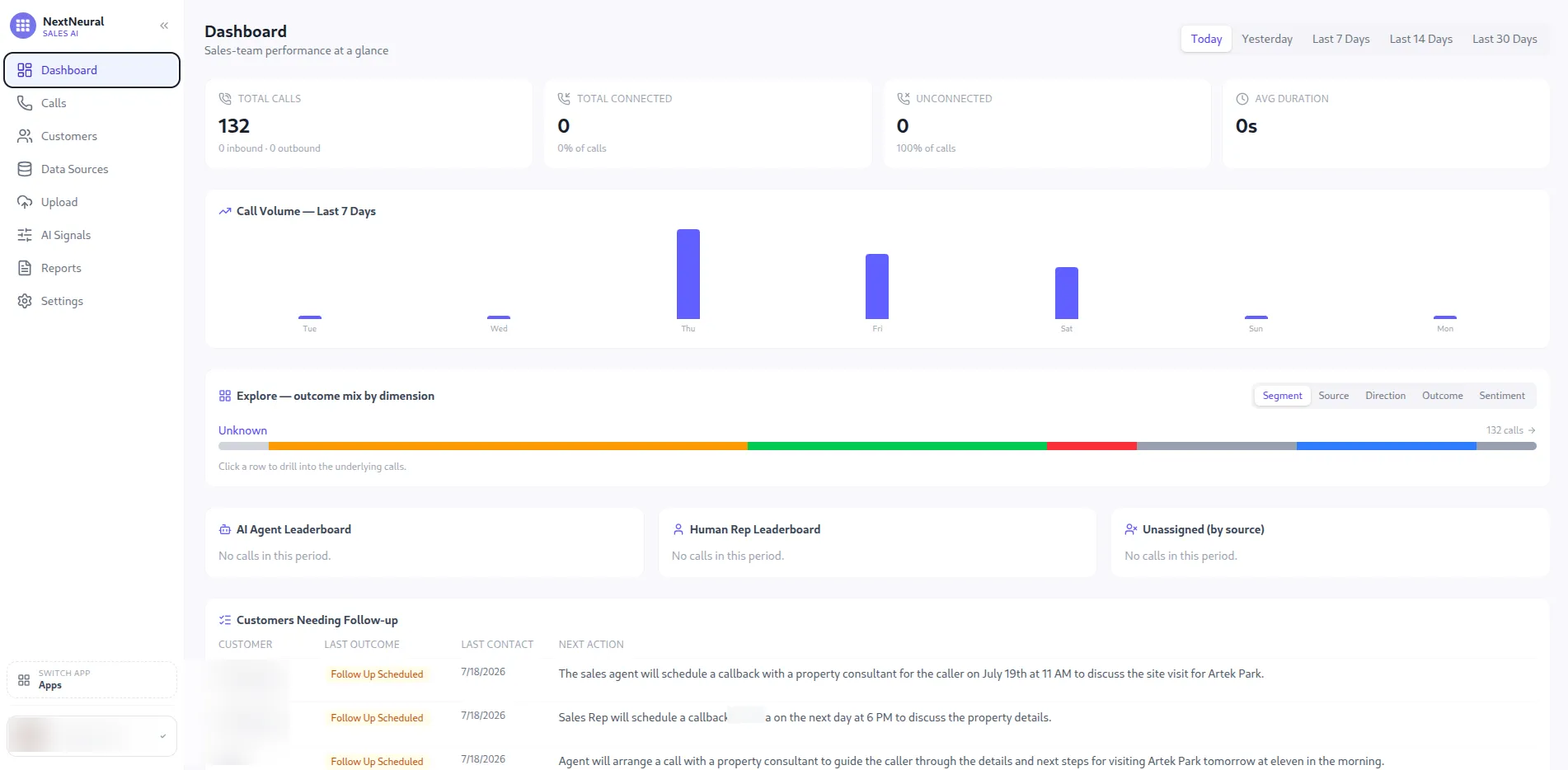
Here’s what actually happens between a rep hanging up the phone and that insight landing in front of a manager.
Step 1: Getting Every Conversation into One Place
Sales conversations don’t happen on a single channel anymore. Your inside team might be dialing out through Twilio or Exotel. Your account executives live on Zoom or Google Meet. Your field reps are making plain cellular calls, or recording a voice memo on their phone after walking a site. If your intelligence platform only listens to one of those channels, you’re only ever seeing part of the picture.
So we built the ingestion layer to not care where a call comes from. Whether it arrives through a voice AI bridge, a webhook from a dialer like Plivo, a Zoom recording, or a rep manually uploading a file from their phone, it all lands in the same place.
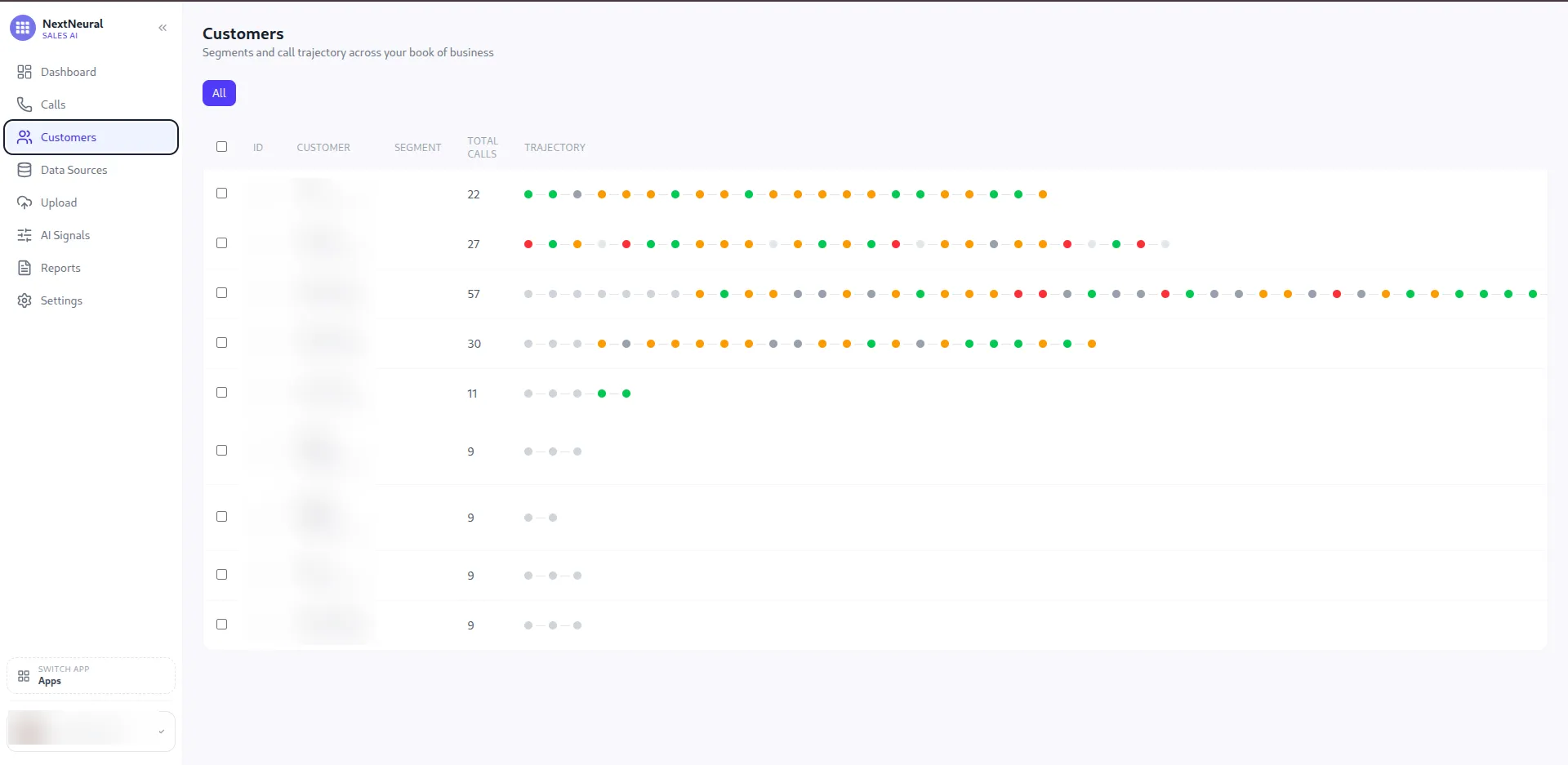
The system also does something a spreadsheet never could: it recognizes people. When a call comes in, it normalizes the phone number and checks it against your existing customer records. If your SDR spoke to a prospect on a cold call last week, and your account executive just had a follow-up on Zoom, the platform knows it’s the same person and ties both conversations to the same profile automatically.
Even when a field rep uploads a recording with no phone number attached, nothing gets lost. The system creates a profile for that contact anyway, so a messy contact form doesn’t mean you lose the intelligence from the conversation.
Step 2: Turning Audio into Something You Can Actually Search
Once a call is in the system, it needs to become text before anything useful can happen with it. Some calls, especially live voice AI conversations, come with a transcript already attached. Most don’t. Most arrive as a raw recording sitting in cloud storage, and you can’t run analysis on an MP3.
So every recording without a transcript gets queued up for transcription in the background. This runs asynchronously on purpose. Transcription is heavy, computationally expensive work, and nobody wants to stare at a spinning loader while it happens.
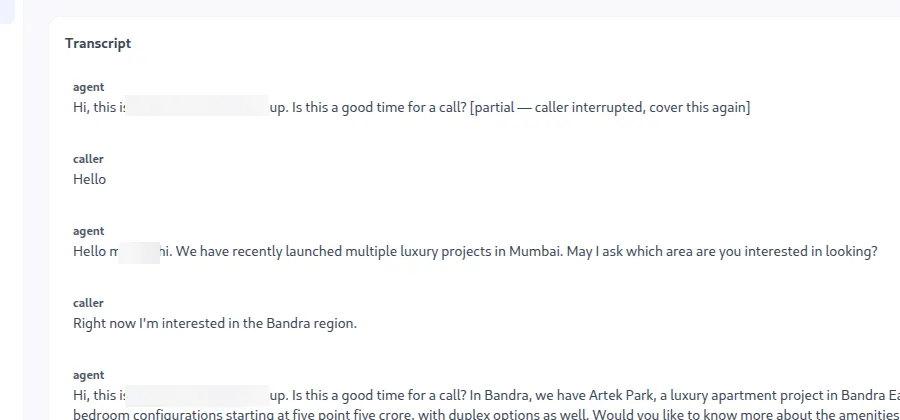
But a wall of text isn’t enough on its own. Knowing who said what matters just as much as knowing what was said. If a transcript includes the line “the price is too high,” it makes a real difference whether the prospect said that, or the rep was just describing a common objection they usually hear. So the transcription is diarized, meaning it’s split by speaker, so every line is clearly attributed.
There’s also a simple sanity check built in. If a recording is silent, or barely a few seconds long, the system doesn’t waste processing power pretending there’s something to analyze in it.
Step 3: Reading the Conversation the Way a Good Manager Would
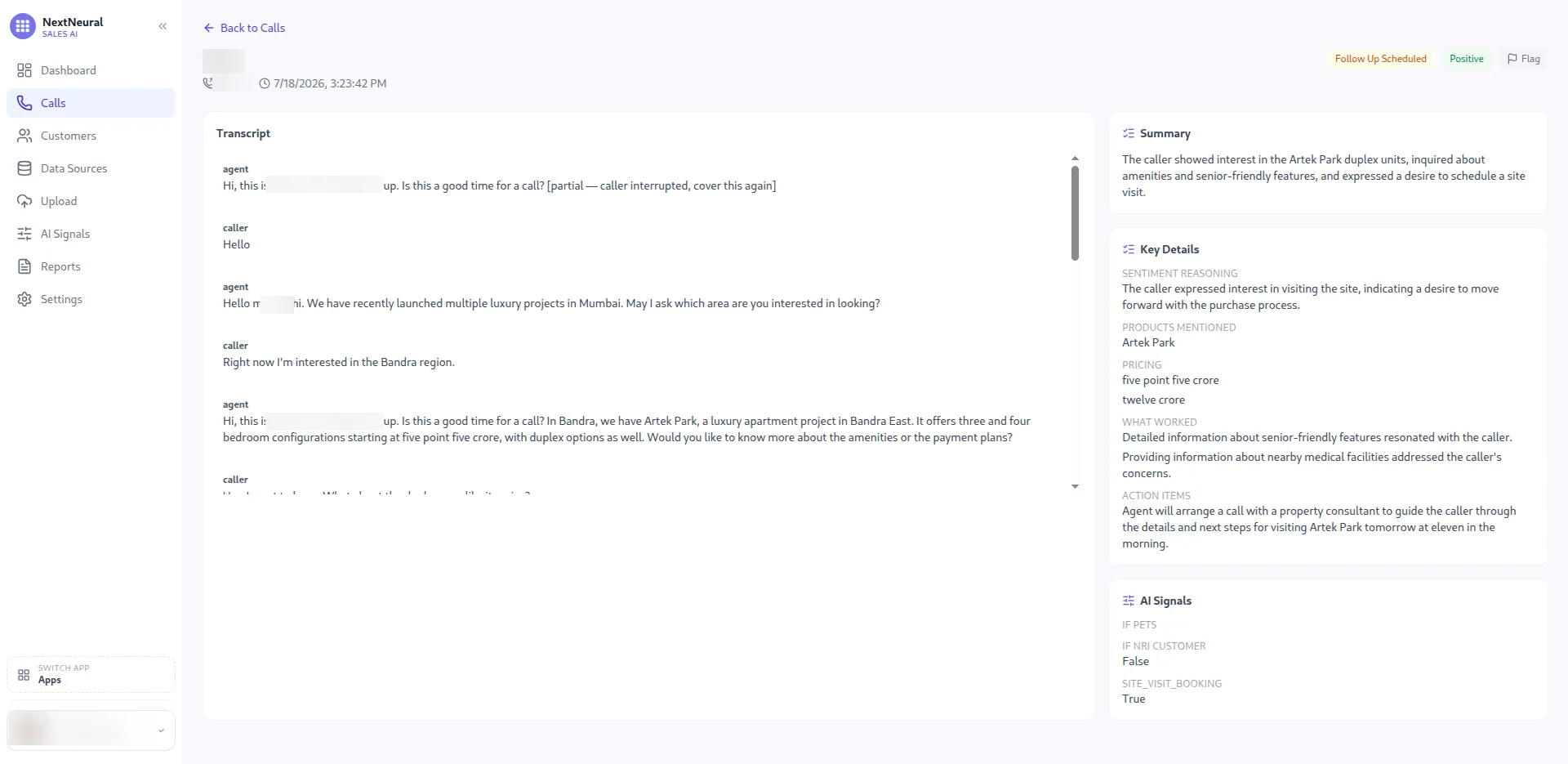
This is where a messy, human conversation turns into something you can actually work with. Once a call has a clean transcript, it gets passed to the extraction engine, which uses large language models to read the whole thing and pull out the intelligence that matters.
What actually happened
Reps tend to pick the first dropdown option that’s close enough. The AI doesn’t. It reads how the call actually ended and sorts it into a clear outcome: resolved, follow-up scheduled, escalated, interested, no interest, voicemail, or failed. If a rep logs a call as “interested” but the prospect can be heard asking to be taken off the call list, the AI calls it what it is. That alone cleans up a lot of overly optimistic pipeline reporting.
How the prospect actually felt
The tone of a call tells you almost as much as the content. The AI reads the language and context and commits to a sentiment: positive, neutral, or negative. It’s built to avoid hiding behind “neutral” as a default. If a call leaned hot or cold, it says so.
A summary you can actually read
Nobody has time to read fifty transcripts before their 9 am standup. Every call gets a one or two sentence summary of what actually happened, so a manager can scan the whole day’s calls in minutes instead of hours.
What worked
This is the part that makes coaching real instead of theoretical. The AI picks out the moments where something the rep said actually landed. If a particular way of framing ROI got the prospect to open up, that gets pulled out as a short, specific note. Now a manager can point to exactly what a top performer is doing right, and pass it on to the rest of the team.
What didn’t work
The same goes in reverse. Objections, friction, moments where the pitch clearly missed. If pricing keeps coming up as a sticking point across dozens of calls, that’s not a one-off complaint anymore. It’s a pattern leadership can see and act on, whether that means new pricing collateral or a different way of framing the ask.
What needs to happen next
A huge number of deals don’t die from rejection. They die from someone forgetting to send the follow-up email. The AI reads the call for every commitment made, by either side, and writes it out as a clear, complete instruction: who’s responsible, and by when. Not “follow up soon,” but something closer to “rep to send the pricing proposal by Friday afternoon.”
What was actually discussed
For any team selling more than one product or service, it matters a great deal what’s actually being pitched out in the field. The engine flags which products came up, along with any pricing, discounts, or financial terms mentioned, so leadership can check that quoted numbers stayed within policy.
Step 4: Teaching the AI to Listen for What Matters to Your Business
The categories above work for almost any sales team, but no two businesses sell the same way. What matters in a conversation for a software company looks nothing like what matters for a logistics firm or a pharmaceutical distributor. So we built a way for organizations to define exactly what they want the AI listening for.
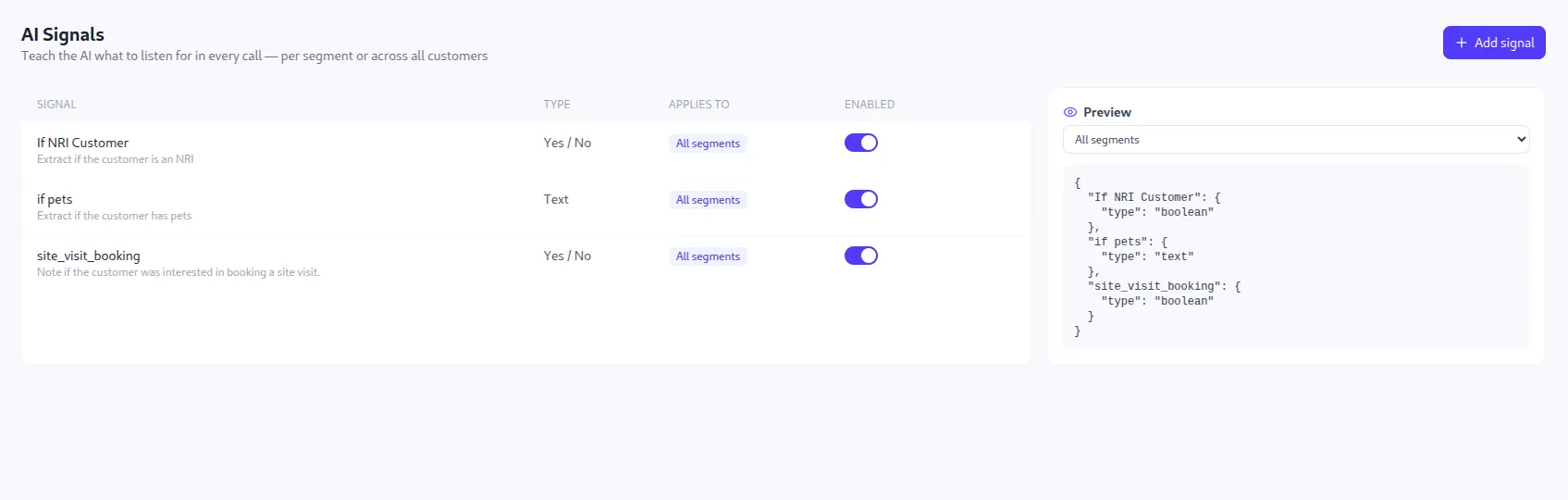
We call these AI Signals. A hardware company might add a field called Competitor Mentioned, so the AI flags whichever rival vendor a prospect says they’re currently using. A financial services firm might add a simple yes or no field for whether a compliance document was requested. You can even set up a multiple choice field like Company Size, and the AI will infer it from context clues in the conversation, no manual tagging required. You can see how these are actually configured at AI Signals.
You can also scope these signals to specific customer segments, because it doesn’t make sense to look for the same things on every call. A conversation with an enterprise account should surface a more complex set of signals than a call with a small business customer, and the platform lets you set that up once and forget it.
Under the hood, before a transcript goes to the model, the system checks which custom fields apply to that customer’s segment and builds the instructions dynamically. Everything, standard intelligence and your own custom signals, comes out of a single pass, fully structured and ready to query.
Step 5: Getting It in Front of the People Who Need It
None of this matters if nobody reads it. A sales manager isn’t going to open a hundred call summaries before their first coffee, no matter how good the data is behind them. So the intelligence has to come to them, not the other way around.
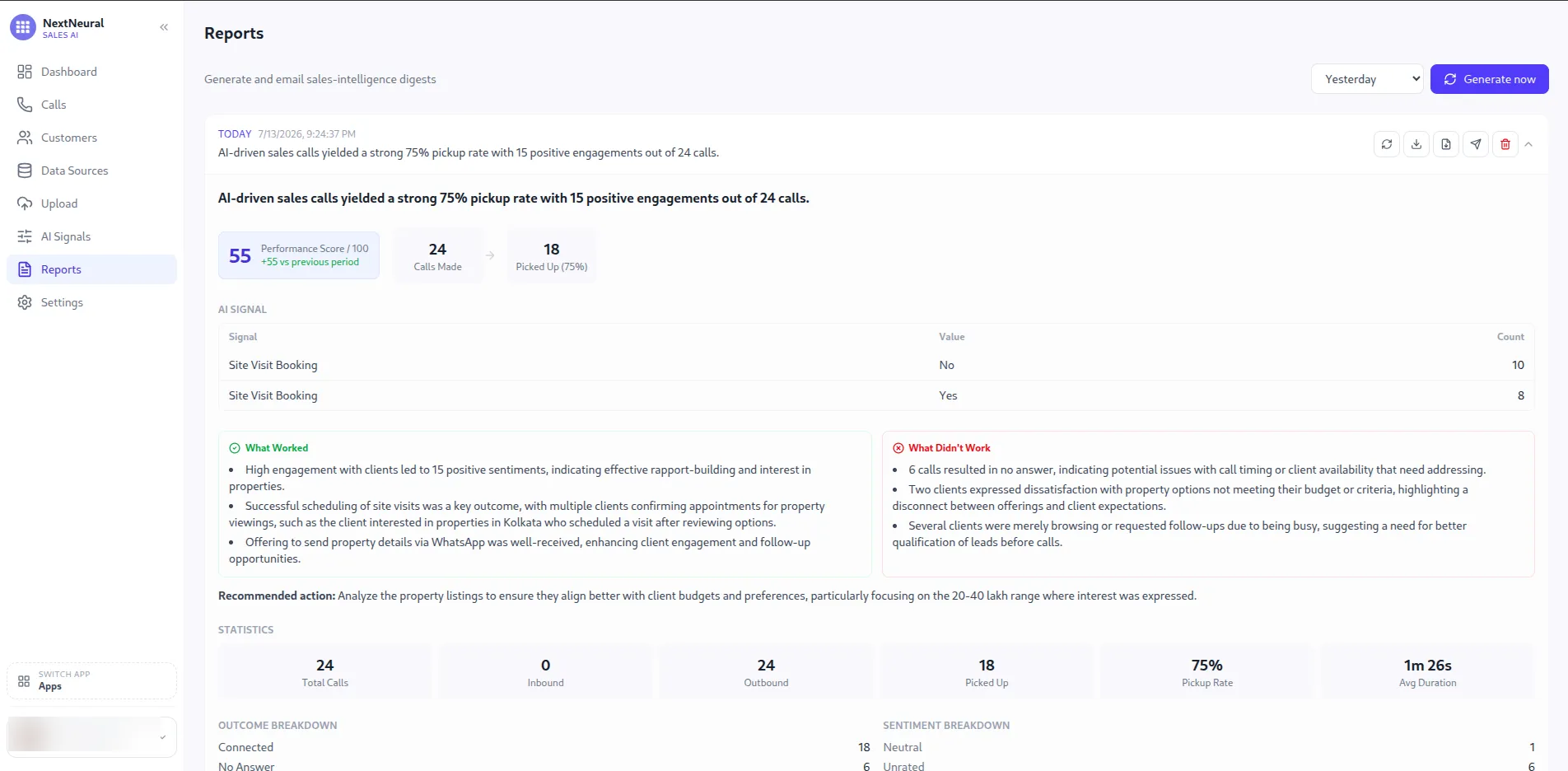
Every night, the platform looks at every organization with active calls in the last day or two and puts together a digest. It pulls together the outcomes, the sentiment, the custom signals, and every action item from the day’s calls, and turns it into something closer to a briefing than a spreadsheet.
It calls out the wins, flags the calls that went sideways, and lists what needs following up, then sends it straight to the inbox of whoever’s managing that team. A manager can open their email and immediately see that their top rep had three strong meetings and stalled on price in a fourth, or that a newer rep needs help handling a specific competitor objection. That’s what it looks like to actually see your pipeline, instead of guessing at it.
From Gut Feeling to Something You Can Actually Check
Sales leadership has run on instinct for a long time, mostly because there wasn’t a better option. When a rep said the market felt soft, a manager had no real way to check that against anything. With voice AI in the pipeline, that changes. If prospects really are bringing up budget concerns more often, the data will show it, across hundreds or thousands of real conversations, not one rep’s read of the room.
A few things shift once this is actually running in an organization.
- Reporting gets more honest. The AI has no quota to hit and no reason to round a call up to “interested.” It just reflects on what was said.
- Coaching stops being occasional. No manager can listen to a hundred calls a week, but the system can, and it surfaces exactly what’s working and what isn’t on every single one.
- Context stops getting lost. Product mentions and recurring objections can go straight to product and marketing teams, so sales calls start acting like an ongoing, highly accurate focus group.
- Follow-ups stop slipping through. When every commitment gets written down with an owner and a deadline attached, there’s nowhere for it to quietly disappear.
This is what we are building at NextNeural: taking the most unreliable data in your business, the actual conversation, and turning it into something you can build a strategy on.
If you’re leading a sales team and still finding out what really happened on a call from a two-line CRM note, that’s exactly the gap this is built to close.
Talk to us about setting up a pilot for your sales team — explore the platform at cloud.nextneural.ai.
Built by the Team Behind Superteams.ai
NextNeural is built and run by Superteams.ai, an R&D-first team that ships production-grade AI systems in 30 to 90 days, across real estate, fintech, and SaaS. The same team behind this platform is the one you’d be talking to.
If you want to get a walk through of what field sales intelligence could look like for your team specifically, book a strategy call with Superteams.
Ready to Transform Your Business with AI?
Join NextNeural today and deploy production-ready AI agents in minutes.
Build an Agent